Glucose, Glycogen, and Ketosis on No Plant GAPS: How Your Body Creates Energy Without Carbohydrates
By Monika Holland MNBP, CGC, CNT
One of the most common concerns people have when transitioning to No Plant GAPS is how the body will function without regular sources of carbohydrates.
Many people have been taught that carbohydrates are essential for energy and that removing plant foods will inevitably lead to low blood sugar, fatigue, brain fog, or metabolic dysfunction. However, human physiology tells a very different story.
The human body is remarkably adaptable. Long before agriculture existed, humans regularly experienced periods with limited carbohydrate intake. To survive and thrive, the body developed sophisticated systems that maintain stable blood sugar and energy production even when carbohydrates are scarce.
Understanding glucose, glycogen, gluconeogenesis, and ketosis can help remove much of the fear surrounding carbohydrate restriction and provide reassurance that the body has built-in mechanisms to meet its energy needs.
For those following the GAPS Nutritional Protocol or the No Plant GAPS approach, these mechanisms become especially relevant as the body shifts away from reliance on plant-based carbohydrates and toward more stable, nutrient-dense sources of fuel.
What Is Glucose?
Glucose is a simple sugar that serves as one of the body's primary energy sources.
Many tissues can use glucose for fuel, including:
The brain
Red blood cells
Muscles
Nervous system tissues
Various organs throughout the body
When people consume carbohydrates such as bread, grains, fruit, legumes, or starchy vegetables, these foods are broken down into glucose and released into the bloodstream.
However, dietary carbohydrates are not the only source of glucose.
The body can manufacture glucose internally whenever it is needed. This ability is one of the reasons humans can successfully thrive on a wide range of dietary patterns, including low-carbohydrate and carnivore-style approaches.
Understanding the Different Types of Carbohydrates
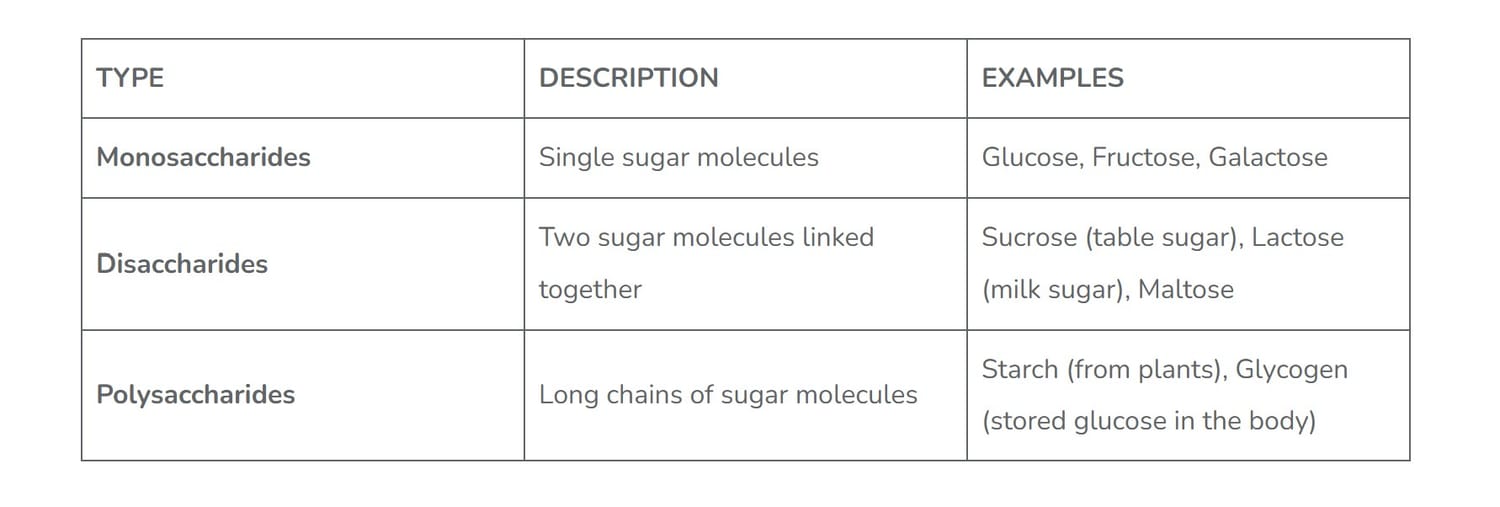
Carbohydrates generally fall into three categories:
Monosaccharides
These are single sugar molecules, including glucose and fructose.
Disaccharides
These consist of two sugar molecules joined together, such as lactose and sucrose.
Polysaccharides
These are long chains of sugar molecules and include starches and glycogen.
While plant-based diets rely heavily on dietary carbohydrates, No Plant GAPS focuses on nutrient-dense animal foods that support healing without requiring continual carbohydrate intake.
What Is Glycogen?
Glycogen is the storage form of glucose.
The body stores glycogen primarily in:
The liver
Skeletal muscles
Think of glycogen as the body's emergency energy reserve.
When blood sugar begins to drop or when energy demands increase, stored glycogen can be broken down and released to provide glucose quickly.
This system helps maintain stable blood sugar between meals, during exercise, and during periods of fasting.
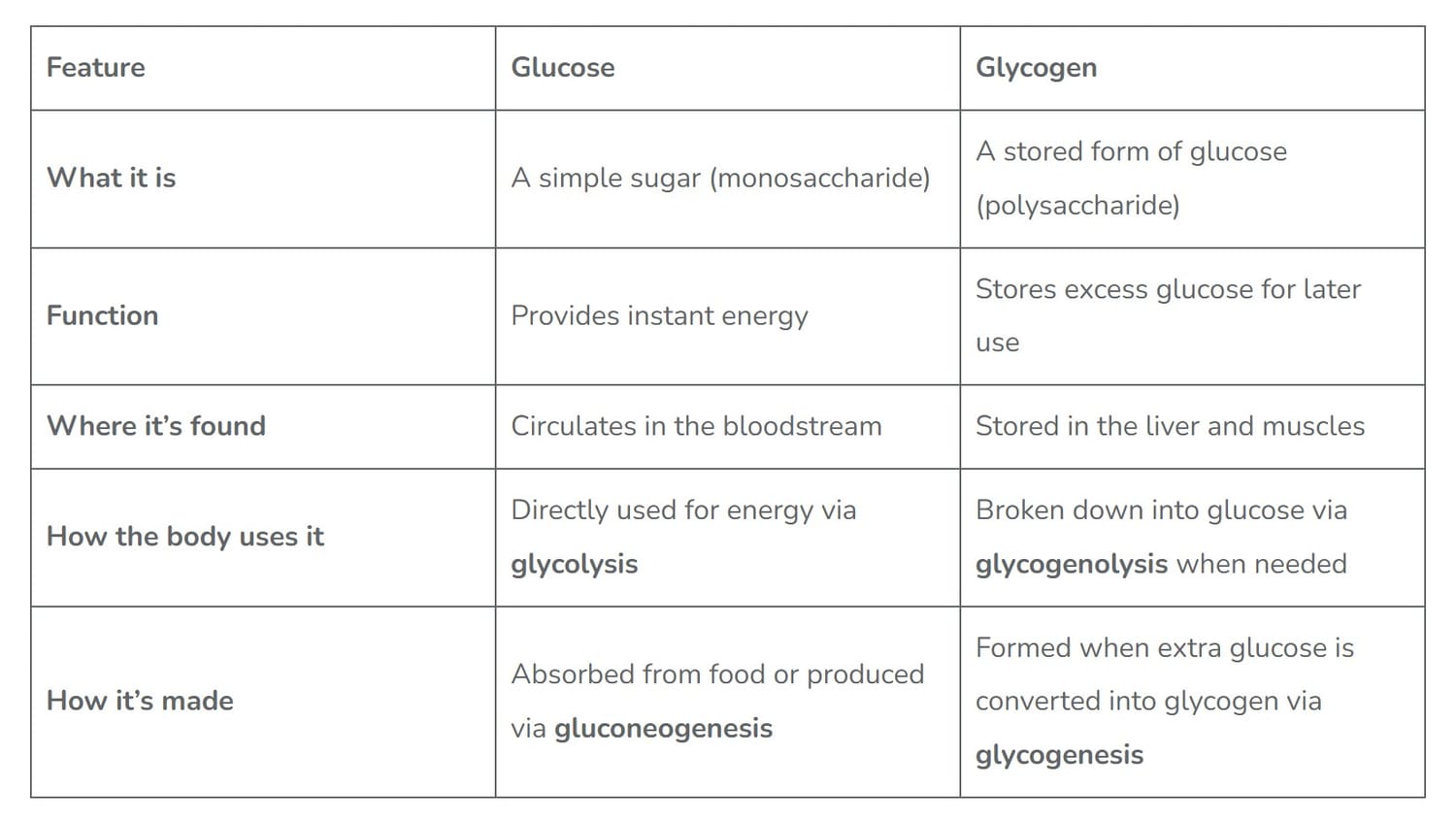
Glucose vs Glycogen: What Is the Difference?
Although the terms are often used interchangeably, they serve very different functions.
Glucose
A single sugar molecule
Circulates in the bloodstream
Provides immediate energy
Can be created from food or produced internally
Glycogen
A storage form of glucose
Stored primarily in liver and muscle tissue
Acts as an energy reserve
Can be broken down when needed
Understanding this distinction helps explain how the body continues functioning even when dietary carbohydrates are absent.
How the Body Maintains Blood Sugar Without Carbohydrates
When carbohydrate intake decreases, the body does not suddenly stop producing glucose.
Instead, it relies on two highly effective metabolic pathways:
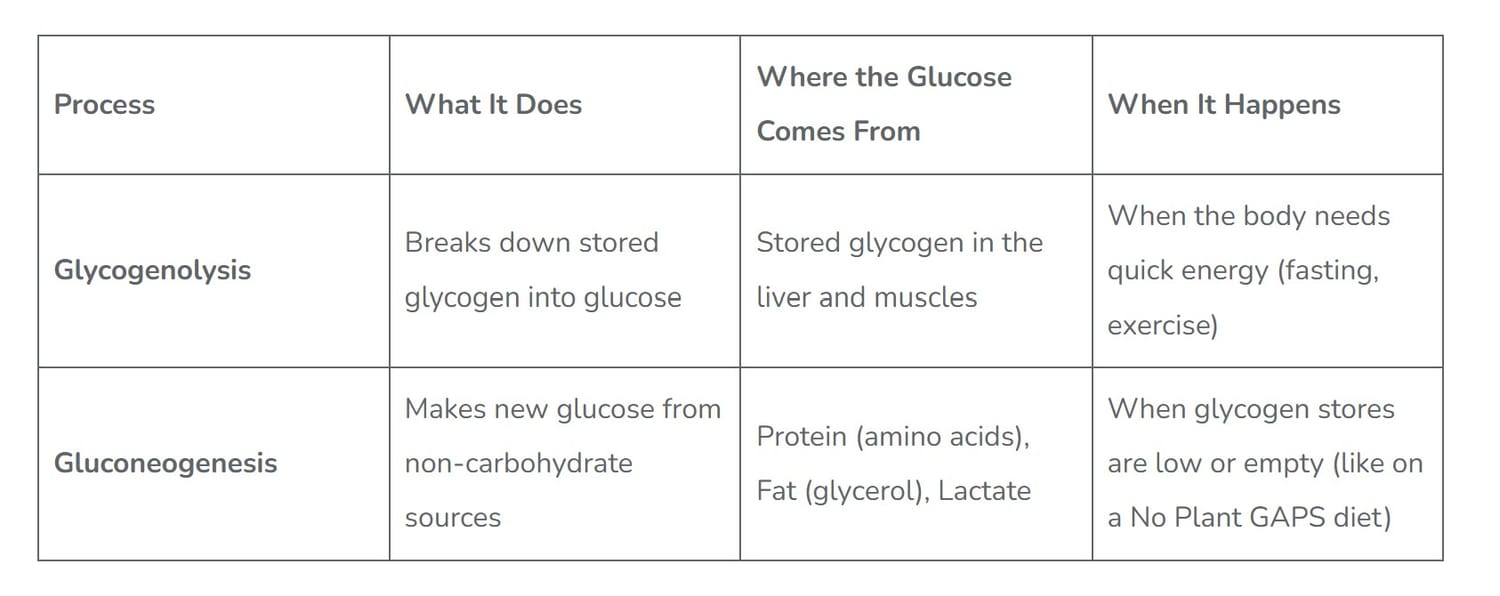
1. Glycogenolysis: Using Stored Glycogen
Glycogenolysis is the process of breaking down glycogen into glucose.
During the early stages of No Plant GAPS, the body often relies on stored glycogen to maintain normal blood sugar levels.
This process commonly occurs:
Between meals
During fasting
During physical activity
During the early stages of carbohydrate restriction
Stored glycogen serves as a temporary bridge while the body adapts to new fuel sources.
2. Gluconeogenesis: Making New Glucose
Once glycogen stores become depleted, the body begins producing new glucose through a process called gluconeogenesis.
This process allows the body to manufacture glucose from non-carbohydrate sources, including:
Amino acids from protein
Glycerol from fat
Lactate produced during normal metabolism
Contrary to popular myths, gluconeogenesis is not an emergency backup system. It is a normal and highly regulated metabolic process that operates continuously to meet the body's needs.
The liver plays a central role in this process, helping maintain stable blood sugar levels even when no dietary carbohydrates are consumed.
Why Gluconeogenesis Is Important for Gut Healing
Many people transitioning to No Plant GAPS worry that removing plant foods will deprive the body of essential fuel.
In reality, gluconeogenesis demonstrates the opposite.
The body creates exactly the amount of glucose required based on physiological demand.
This can be particularly beneficial during gut healing because it reduces dependence on frequent carbohydrate intake while supporting:
Blood sugar stability
Reduced metabolic stress
Improved energy regulation
Hormonal balance
Nervous system resilience
Individuals working on digestive healing often notice improvements in energy consistency once blood sugar fluctuations begin to settle.
What Is Ketosis?
As carbohydrate intake remains low and the body becomes increasingly adapted to fat metabolism, another metabolic pathway becomes more prominent: ketosis.
Ketosis occurs when the body shifts toward using fat as its primary fuel source.
During this process:
Fat is broken down into fatty acids.
The liver converts some fatty acids into ketones.
Ketones become an efficient fuel source for many tissues, including the brain.
Ketosis is not starvation.
It is a normal metabolic state that humans have relied on throughout history.
How the Body Transitions on No Plant GAPS
The shift typically follows several stages.
Stage 1: Glycogen Utilisation
Initially, the body draws on stored glycogen to maintain energy production.
Stage 2: Increased Gluconeogenesis
As glycogen stores decline, the body increases glucose production from protein and fat-derived substrates.
Stage 3: Fat Adaptation
Over time, the body becomes more efficient at burning fat for fuel.
Stage 4: Greater Ketone Production
Ketones begin supplying a significant portion of energy needs, reducing dependence on glucose.
Stage 5: Metabolic Flexibility
The body learns to switch efficiently between fuel sources depending on activity levels, stress, and physiological demands.
This flexibility is one of the hallmarks of robust metabolic health.
The Connection Between Ketosis and Nervous System Regulation
One reason many people report improvements in mood, focus, and energy on No Plant GAPS may relate to improved nervous system regulation.
Frequent blood sugar fluctuations can contribute to:
Stress hormone activation
Adrenal strain
Mood instability
Fatigue
Anxiety-like symptoms
More stable energy production from fat and ketones may help support a calmer physiological state.
Because the gut and brain communicate continuously through the gut-brain axis, improvements in digestive function often have far-reaching effects on emotional and neurological wellbeing.
Mineral Balance Matters During Adaptation
During the transition away from carbohydrates, mineral requirements often change.
Many symptoms commonly blamed on carbohydrate restriction may actually result from shifts in:
Sodium
Potassium
Magnesium
Hydration status
Supporting mineral balance can make adaptation significantly smoother and help reduce temporary symptoms that some individuals experience.
This is one reason nutrient-dense animal foods play such an important role within the No Plant GAPS framework.
Gut Healing, Histamine, Oxalates, and Energy Metabolism
Many people exploring No Plant GAPS are also navigating challenges such as:
Histamine intolerance
Oxalate sensitivity
Digestive dysfunction
Chronic inflammation
Microbiome imbalances
As gut function improves and inflammatory burdens decrease, metabolic efficiency often improves as well.
A healthier digestive system may support better nutrient absorption, improved mitochondrial function, and more stable energy production.
This interconnected approach is one reason many individuals are drawn to the healing principles outlined by Dr. Natasha Campbell-McBride and the GAPS Nutritional Protocol.
To learn more about the foundations of this approach, visit No Plant GAPS and explore the resources available throughout the site.
You can also learn more about Monika Holland's background and mission on the About page.
The Bottom Line
The body does not require a constant supply of dietary carbohydrates to maintain blood sugar or produce energy.
Instead, it uses a sophisticated combination of:
Glycogen storage
Glycogenolysis
Gluconeogenesis
Ketosis
These systems allow humans to thrive across a wide range of dietary environments.
For those following No Plant GAPS, understanding these natural metabolic processes can help reduce fear and build confidence in the body's remarkable ability to adapt, heal, and regulate itself.
Whether your goals include digestive healing, nervous system regulation, microbiome restoration, or improved metabolic health, recognising how the body produces energy without carbohydrates is a valuable piece of the puzzle.
For additional educational resources, visit the No Plant GAPS Blog.
Frequently Asked Questions
Does the body need carbohydrates to survive?
No. The body can produce glucose through gluconeogenesis and can also use ketones derived from fat as an alternative fuel source.
What happens when glycogen stores run out?
The body increases gluconeogenesis and gradually relies more heavily on fat metabolism and ketone production.
Is No Plant GAPS ketogenic?
Not necessarily. Some individuals may enter ketosis, while others may remain in varying metabolic states depending on protein intake, activity levels, and individual physiology.
Can the brain function without carbohydrates?
Yes. The brain can utilise ketones for a significant portion of its energy needs while the body produces the remaining glucose required through gluconeogenesis.
Why do some people feel tired when transitioning to No Plant GAPS?
Temporary fatigue can occur during adaptation as the body shifts fuel sources. Changes in mineral balance, hydration, and metabolic flexibility often play a significant role.
Ready to Go Deeper?
If you would like personalized No Plant GAPS support tailored to your situation, you can learn more here:
WORK WITH ME – Personalized No Plant GAPS Support
You can also access my free educational webinar here:
For a deeper understanding of the philosophy behind GAPS and No Plant GAPS, including my educational interview with Dr. Natasha Campbell-McBride:
Exclusive Interview with Dr. Natasha Campbell-McBride
And if you want a structured, step-by-step implementation guide:
No Plant GAPS DIY Deep Dive Course
The No Plant GAPS Training is now also available in Polish for our Polish-speaking community.
Summary of the information below:



Disclaimer: The information provided in this article is for educational and informational purposes only and is not intended as medical advice. It should not be used to diagnose, treat, cure, or prevent any medical condition. Always consult a qualified healthcare professional before making changes to your diet, supplements, or health practices.
Reliable No Plant GAPS Insights, Expert Guidance, Updates, Tools, and Valuable Resources from a Dedicated No Plant GAPS Hub supported by Dr. Natasha Campbell-McBride

