Why Does Liver Make Me Feel Exhausted? Understanding the Root Causes Through the No Plant GAPS Lens
By Monika Holland MNBP, CGC, CNT
Liver has earned its reputation as one of the most nutrient-dense foods available. Rich in highly bioavailable vitamins, minerals, amino acids, and essential cofactors, it has been valued by traditional cultures for generations as a powerful food for rebuilding health.
Within the GAPS Nutritional Protocol and the No Plant GAPS approach, liver is often considered one of the most therapeutic animal foods because it delivers nutrients that support digestive healing, immune function, nervous system regulation, hormone production, and cellular repair.
Yet many people are surprised when they finally introduce liver into their diet and feel worse instead of better.
Perhaps you experience overwhelming fatigue shortly after eating it. Maybe you develop dizziness, nausea, headaches, brain fog, anxiety, or simply feel like your energy completely crashes.
Although these reactions can be alarming, they do not necessarily mean liver is harmful or that you should avoid it forever. In many cases, they reveal important information about your current state of healing.
Rather than viewing these symptoms as a sign that liver is "bad," it is often more accurate to see them as clues that your metabolism, detoxification systems, mineral balance, mitochondria, or nervous system require additional support before they can comfortably utilise such a concentrated source of nutrition.
Understanding these mechanisms can help you introduce liver more successfully while continuing to heal your gut and rebuild resilience.
Why Liver Is Such a Powerful Healing Food
Few foods compare with liver in terms of nutritional density.
It naturally contains:
Highly bioavailable vitamin A (retinol)
Vitamin B12
Folate
Riboflavin (B2)
Vitamin B6
Iron
Copper
Choline
Coenzyme Q10
Complete protein
Numerous enzymes and cofactors that support energy production
Unlike isolated supplements, these nutrients exist in a natural food matrix that has nourished humans throughout history.
For individuals recovering from chronic illness, digestive dysfunction, nutrient deficiencies, or long-term malnutrition, liver can provide many of the raw materials necessary for rebuilding tissues and restoring metabolic function.
However, because liver delivers such a concentrated nutritional load, introducing it into a body that is already struggling can sometimes expose underlying weaknesses.
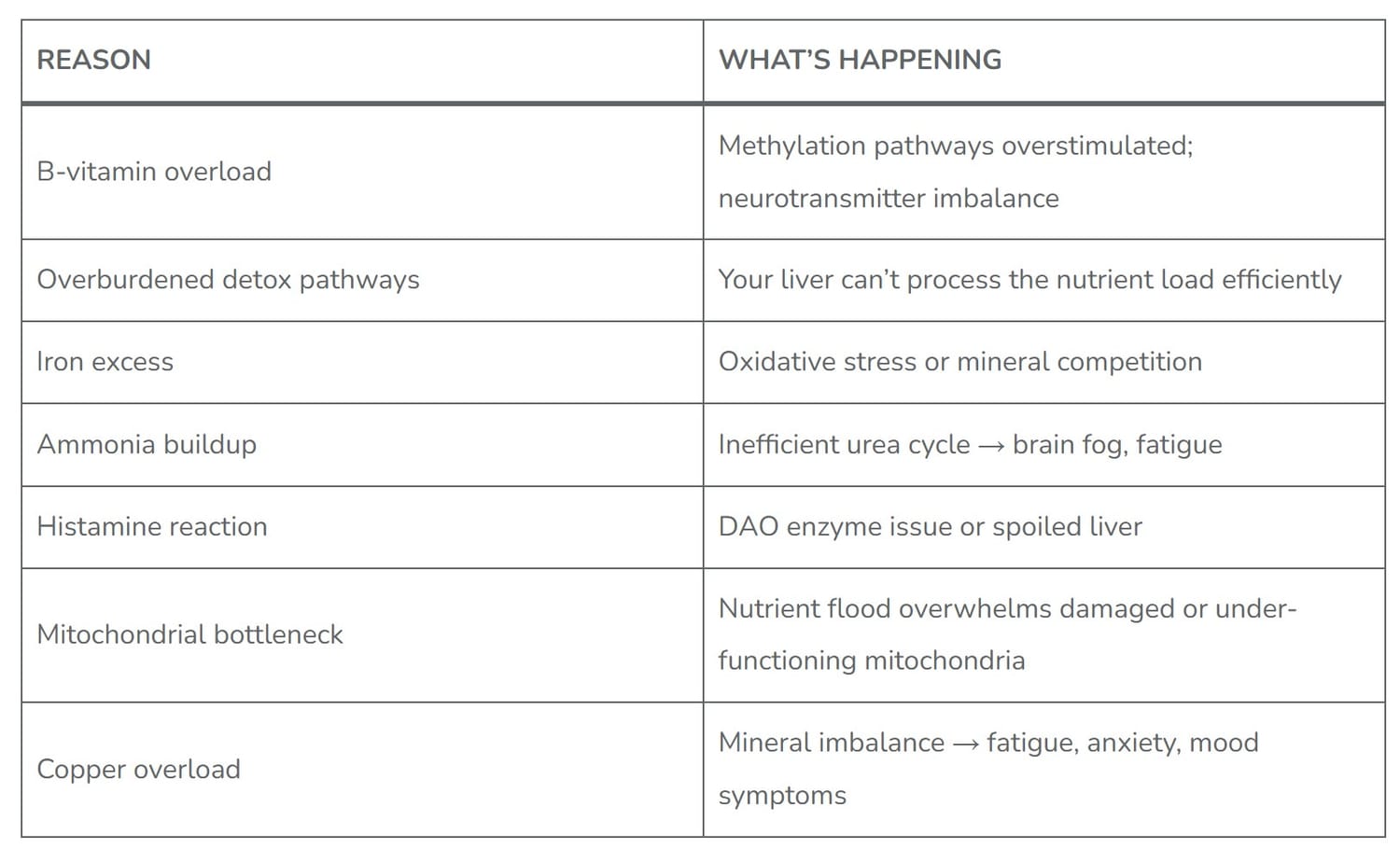
1. A Sudden Flood of B Vitamins Can Overwhelm a Fragile System
One of the most common reasons people feel exhausted after eating liver is its exceptionally high concentration of B vitamins.
These vitamins are essential for almost every aspect of cellular metabolism, including:
ATP production
Methylation
Neurotransmitter synthesis
DNA repair
Nervous system function
Detoxification pathways
Normally, these nutrients improve energy production.
However, if these pathways have been functioning poorly for years due to chronic stress, digestive dysfunction, nutrient depletion, infections, or genetic variations, suddenly supplying large amounts of B vitamins may temporarily overwhelm the system rather than immediately improving function.
Methylation May Not Be Ready
Methylation is one of the body's most important biochemical processes.
It helps regulate:
Detoxification
Neurotransmitter production
Hormone metabolism
Immune regulation
DNA repair
Energy production
Individuals with genetic polymorphisms affecting enzymes such as MTHFR, MTRR, COMT, or related pathways may process methyl donors differently.
When liver rapidly supplies folate, vitamin B12, vitamin B2, and vitamin B6, these pathways can suddenly accelerate.
Instead of feeling energised, some people experience:
Extreme fatigue
Brain fog
Anxiety
Feeling "wired but tired"
Irritability
Poor sleep
Emotional sensitivity
These symptoms do not necessarily indicate toxicity. Rather, they may reflect a temporary imbalance as the body attempts to adapt to increased metabolic activity.
Neurotransmitter Production Can Shift Rapidly
Several B vitamins directly influence neurotransmitter production.
Vitamin B6 plays a critical role in producing serotonin, dopamine, GABA, and other brain chemicals.
Vitamin B2 activates numerous enzymes involved in cellular metabolism.
Vitamin B12 supports nerve health and neurological function.
When these nutrients suddenly become available after long-term deficiency, neurotransmitter production may fluctuate before reaching a new equilibrium.
This adjustment period can leave some individuals feeling mentally exhausted, emotionally sensitive, or unusually fatigued.
Within the No Plant GAPS framework, this is one reason why introducing nutrient-dense foods gradually is often preferable to consuming large servings immediately.
2. Your Own Liver May Already Be Overworked
Although eating liver supports nutrition, it also places demands on your own liver.
Your liver remains the body's primary detoxification organ, responsible for processing nutrients, hormones, environmental toxins, metabolic waste products, medications, and inflammatory compounds.
If these systems are already functioning below optimal capacity, introducing a food as nutrient-rich as liver may temporarily increase the workload.
Vitamin A Requires Healthy Processing
Liver is exceptionally rich in retinol, the active form of vitamin A.
Retinol is essential for:
Immune function
Vision
Skin integrity
Hormone production
Cellular repair
Gut lining regeneration
However, vitamin A must be transported, stored, and metabolised efficiently.
If liver function is compromised or bile flow is sluggish, processing this concentrated dose may become difficult.
Some individuals experience:
Fatigue
Nausea
Digestive discomfort
Loss of appetite
Brain fog
This does not necessarily indicate vitamin A toxicity but may reflect impaired handling of an otherwise beneficial nutrient.
Bile Flow Plays a Major Role
Healthy bile flow is essential for digesting fats and absorbing fat-soluble nutrients.
Bile also assists the body in removing toxins, excess hormones, cholesterol metabolites, and inflammatory waste products.
Poor bile flow may result from:
Chronic inflammation
Gallbladder dysfunction
Nutrient deficiencies
Long-term digestive disorders
Nervous system dysregulation
When liver introduces additional fats, cholesterol, and fat-soluble vitamins, sluggish bile flow may contribute to bloating, nausea, fullness, or overwhelming fatigue.
Supporting digestion before increasing liver intake often allows these symptoms to improve over time.
3. Iron Overload Can Increase Oxidative Stress in Sensitive Individuals
Liver is one of the richest natural sources of highly absorbable heme iron.
Iron is indispensable for:
Oxygen transport
Red blood cell formation
Immune health
Thyroid function
Mitochondrial energy production
However, more iron is not always better.
When iron intake exceeds the body's immediate requirements, excess free iron may contribute to oxidative stress through the production of reactive oxygen species.
Individuals with iron overload disorders, impaired iron regulation, chronic inflammation, or reduced antioxidant capacity may experience temporary symptoms after consuming large portions of liver.
These symptoms can include:
Fatigue
Headaches
Joint discomfort
Brain fog
Irritability
Iron also interacts closely with copper, zinc, manganese, and other essential minerals.
Maintaining proper mineral balance is one of the reasons Hair Tissue Mineral Analysis (HTMA) can provide valuable insights when symptoms persist despite following a nutrient-dense diet.
Rather than eliminating liver altogether, reducing portion size, improving mineral balance, and supporting overall metabolic health often allows the body to gradually tolerate this highly therapeutic food more comfortably.
4. High Protein Intake Can Increase Ammonia Production
Another overlooked reason liver can leave you feeling exhausted is its naturally high protein content.
Protein is essential for healing, tissue repair, immune function, and maintaining muscle mass. However, breaking down protein also produces ammonia, a nitrogen-containing waste product that is toxic in high concentrations.
Fortunately, the liver converts ammonia into urea through the urea cycle, allowing it to be safely eliminated through the kidneys.
When this process functions efficiently, ammonia never accumulates to problematic levels. However, if the liver is under stress or the urea cycle is not operating optimally, ammonia may temporarily build up after consuming protein-rich foods like liver.
Signs of Elevated Ammonia
Excess ammonia can affect both the brain and nervous system, leading to symptoms such as:
Mental fatigue
Brain fog
Poor concentration
Headaches
Feeling sleepy after meals
Reduced exercise tolerance
Difficulty thinking clearly
Individuals with mitochondrial dysfunction, chronic infections, liver congestion, nutrient deficiencies, or impaired sulfur metabolism may be particularly sensitive.
Within the No Plant GAPS approach, improving digestive function, supporting liver health, restoring mineral balance, and introducing nutrient-dense foods gradually often helps improve protein tolerance over time.
5. Histamine Intolerance May Be Contributing
Fresh liver itself is not considered a particularly high-histamine food.
However, histamine levels rise rapidly once liver has been cooked and stored.
Because organ meats are extremely nutrient dense, bacteria can multiply quickly if storage conditions are less than ideal. As bacteria grow, they convert amino acids into histamine, which cannot be destroyed by reheating.
For people with histamine intolerance or reduced diamine oxidase (DAO) enzyme activity, this can trigger noticeable symptoms.
Common Histamine Symptoms
After eating leftover or poorly stored liver, you may experience:
Fatigue
Flushing
Dizziness
Headaches
Heart palpitations
Brain fog
Anxiety
Digestive discomfort
Skin itching
Many people mistakenly assume they cannot tolerate liver, when in reality they are reacting to histamine accumulation rather than the liver itself.
Whenever possible, purchase the freshest liver available, freeze portions immediately, thaw only what you intend to eat, and avoid consuming leftovers that have been sitting in the refrigerator for several days.
6. Mitochondrial Overload Can Temporarily Reduce Energy
Many people assume that more nutrients automatically translate into more energy.
In reality, energy production depends on how efficiently your mitochondria can utilise those nutrients.
Liver supplies numerous compounds that support mitochondrial function, including:
B vitamins
Iron
Copper
Coenzyme Q10
Amino acids
Vitamin A
These nutrients are required to produce ATP—the primary energy currency of every cell.
However, if mitochondria have been impaired by chronic illness, infections, environmental toxins, nutrient deficiencies, prolonged stress, or inflammation, suddenly increasing nutrient availability may temporarily expose metabolic bottlenecks.
Instead of producing more energy immediately, your cells may struggle to keep up with the increased demand.
This temporary mismatch can leave you feeling more tired before improvements occur.
Why Healing Doesn't Always Feel Good
One of the most misunderstood aspects of recovery is that healing is rarely linear.
As metabolic pathways begin functioning again, the body often reallocates resources toward repair.
During this period, some individuals experience temporary fatigue as damaged tissues heal, detoxification increases, and nutrient deficiencies begin to correct.
This doesn't necessarily mean something has gone wrong.
It often reflects a body that is beginning to recover but still lacks the resilience to comfortably handle large nutritional inputs.
7. Copper Imbalance Can Affect the Nervous System
Liver is one of nature's richest sources of highly bioavailable copper.
Copper is an essential mineral that supports:
Energy production
Iron metabolism
Connective tissue formation
Antioxidant defence
Brain development
Nervous system function
Like every essential nutrient, however, copper functions best when balanced with other minerals.
Copper Must Remain in Balance
Copper interacts closely with:
Zinc
Iron
Manganese
Magnesium
Vitamin A
When these minerals become imbalanced, additional copper from liver may temporarily contribute to symptoms in susceptible individuals.
Possible symptoms include:
Fatigue
Mood changes
Anxiety
Irritability
Skin breakouts
Poor stress tolerance
It's important to remember that these symptoms do not automatically mean copper is harmful.
More often, they reflect underlying mineral dysregulation that has developed over months or years.
Rather than avoiding nutrient-rich foods indefinitely, restoring proper mineral balance can help improve tolerance while supporting long-term metabolic health.
Why Feeling Exhausted After Eating Liver Is Often a Sign Your Body Needs More Support—Not Less
If liver consistently leaves you feeling exhausted, dizzy, nauseous, or mentally foggy, it's understandable to question whether you should continue eating it.
However, these reactions often indicate that your body is asking for support rather than avoidance.
Within the No Plant GAPS approach, symptoms are viewed as valuable feedback rather than isolated problems. They often reveal areas where healing is still taking place, including digestive capacity, liver function, mitochondrial resilience, nervous system regulation, detoxification pathways, and mineral balance.
Instead of forcing larger portions, consider introducing liver gradually.
Many people tolerate:
Very small portions once or twice per week
Frozen raw liver capsules made from fresh liver
Mixing small amounts into minced meat
Supporting digestion before increasing intake
Prioritising sleep, stress reduction, and nervous system regulation
Over time, as digestive function improves and the body's ability to process nutrients becomes more efficient, tolerance often increases naturally.
Healing is not about forcing the body to accept therapeutic foods before it is ready.
It is about creating the internal environment where those foods can finally be received and utilised effectively.
When liver becomes energising instead of exhausting, it is often a sign that deeper healing has occurred.
Frequently Asked Questions
Why do I feel extremely tired after eating liver?
Fatigue after eating liver may be related to nutrient overload, sluggish detoxification pathways, impaired bile flow, mitochondrial dysfunction, histamine intolerance, ammonia accumulation, or underlying mineral imbalances. These reactions do not necessarily mean liver is harmful.
Should I stop eating liver if it makes me feel sick?
Not necessarily. Many people benefit from reducing the serving size while improving digestion, supporting detoxification, and restoring mineral balance. As healing progresses, liver often becomes much easier to tolerate.
Can liver trigger detox symptoms?
Because liver provides concentrated vitamins and minerals that activate numerous metabolic pathways, some individuals may experience temporary detoxification symptoms if their liver, nervous system, or detox pathways are already under stress.
Is liver recommended on the No Plant GAPS Diet?
Yes. Liver is considered one of the most nutrient-dense animal foods and can play an important role in supporting gut healing, nervous system recovery, immune health, and overall nutrient replenishment when introduced appropriately.
Can HTMA help explain why I react poorly to liver?
Hair Tissue Mineral Analysis (HTMA) can provide valuable insights into mineral patterns involving copper, iron, zinc, magnesium, calcium, sodium, and potassium. These patterns may help explain why some individuals struggle to tolerate highly nutrient-dense foods and can guide a more personalised healing approach.
Ready for Personalised Support?
Every healing journey is unique. If you're experiencing fatigue after eating liver or struggling with food reactions while following the GAPS Nutritional Protocol, personalised guidance can make all the difference.
Ready to Go Deeper?
If you would like personalized No Plant GAPS support tailored to your situation, you can learn more here:
WORK WITH ME – Personalized No Plant GAPS Support
You can also access my free educational webinar here:
For a deeper understanding of the philosophy behind GAPS and No Plant GAPS, including my educational interview with Dr. Natasha Campbell-McBride:
Exclusive Interview with Dr. Natasha Campbell-McBride
And if you want a structured, step-by-step implementation guide:
No Plant GAPS DIY Deep Dive Course
The No Plant GAPS Training is now also available in Polish for our Polish-speaking community.



Disclaimer: The information provided in this article is for educational and informational purposes only and is not intended as medical advice. It should not be used to diagnose, treat, cure, or prevent any medical condition. Always consult a qualified healthcare professional before making changes to your diet, supplements, or health practices.
Reliable No Plant GAPS Insights, Expert Guidance, Updates, Tools, and Valuable Resources from a Dedicated No Plant GAPS Hub supported by Dr. Natasha Campbell-McBride

